

THANK YOU FOR SUBSCRIBING
A featured contribution from Leadership Perspectives: a curated forum reserved for leaders nominated by our subscribers and vetted by our Manufacturing Technology Insights Advisory Board.

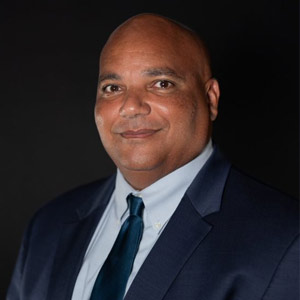
I recently spoke on a panel about my experiences in the Diversity, Equity, and Inclusion space at a HSE conference with other HSE (Health, Safety, and Environmental) Leaders. I effectively answered the questions and discussion points on Diversity and Inclusion in the HSE space, but I could have shared more examples of how Equity is important in HSE. So I decided to use this magazine article platform to share my perspective on Diversity, Equity, and Inclusion post my recent research.
Diversity – the practice and quality of including or involving people from a range of different backgrounds of obviousness that can include social economics, ethnic, age, education, thought, genders, sexual orientation, culture norms, religion, nationality, and others.
Equity – the practice of fair treatment of all work family members, so that the cultural norms, practices, and policies in place ensure personal identity is not predictive of opportunities or workplace outcomes. Equity differs from equality in a subtle, but important way. While equality assumes that all people should be treated the same, equity takes into consideration a person’s unique circumstances, adjusting treatment accordingly, so that the result is equal. In the HSE space, Equity can come in the form of, 1. all work family members receive accurate fitting gloves, uniforms, shoes, and other personal protective equipment items, no matter their gender or body type, 2. all work family members receive quality HSE training before starting work, no matter their first language needs, 3. all work family members receive the same level of emergency evacuation assistance, no matter where they work and physical differences they may have.
Inclusion – the practice of providing equal access to opportunities and resources for underrepresented work family members, who might otherwise be excluded or marginalized. These work family members may include those who have physical differences, intellectual disabilities, and members of other underrepresented groups.
I have served in work families where Diversity, Equity, and Inclusion practices were not applied effectively. The lack of effectively applying Diversity, Equity, and Inclusion practices negatively impacted the overall moral of the underrepresented work family members, as well as their allies. Ensuring that everyone feels seen, heard, respected, and cared about is important, especially in the HSE Space. HSE Leaders have an important role in practicing effective DEI strategies and tactics outside of the well-known job opportunities, professional development, and compensation space of Equity:
● I served in a global HSE Leadership Team a few years ago that lacked diversity of thought. The primary thought influencers were of the same background of obviousness which excluded me. The lack of diverse thought leadership and collaboration caused frustration and stress in a few of the team members that were not primary influencers. Having diversity of thought is not only good for the team to collaborate on different views, but it makes everyone feel valued and respected.
● When I worked as a global lead in process safety, I had more than process safety ideas, best practices, and lessons learned to offer to the organization. I had specific expertise in our personal safety challenge space that could have helped turn our injury experience rate around to the positive direction. Unfortunately, the leader of the group did not include me in their strategic and tactical discussions on personal injury event prevention. Not being included, when I knew and proved later that my subject matter expertise added value to company and most importantly, work family members’ lives by reducing injury events, was challenging for me.
● I worked with a HSEQ subject matter expert that did not have an advocate in the executive leadership space. This HSEQ subject matter expert was denied professional development training, stretch positions, high visible project leadership roles, fair compensation, and other elements of equity as compared to their peers. The lack of equity in the examples I shared earlier caused the HSEQ subject matter expert to seek that equity treatment in other organizations / work families.
I have served in work families where Diversity, Equity, and Inclusion practices were applied effectively, and it positively impacted the overall moral of the underrepresented work family members, as well as their allies. Ensuring that everyone felt seen, heard, respected and cared about is important, especially in the HSE Space. HSE Leaders have an important role in practicing effective DEI strategies and tactics:
● I visited a construction project in India in 2018 that exemplified the importance of making sure work family members felt included in safe work planning and execution. At the start of the workday, all work family members would make a circle around a white board to document and discuss what work they were going to complete that day, the anticipated and recognized hazards of the planned work, and how the hazards would be managed effectively. The frontline leaders that effectively included input from the work family had better work quality experiences; they were typically a head of schedule, and the work was performed safely.
● I served a project work family in Mongolia from afar who had a baseline value of equity in how work family members, contractors, and visitors were treated. Everyone was provided HSE training in their first language; everyone was provided the same style and correct size of work uniform no matter the position (One Work Family), and the project group meetings were open to be attended by everyone. Equitable treatment of everyone was a focus of the project leadership team which provided the foundation of a One Team – One Work Family Approach to delivering the project
● I worked with a Health, Safety, Security, Environmental, and Quality (HSSEQ) Leadership team approximately ten years ago that was naturally and purposefully diverse. The HSSEQ leaders came from different backgrounds of thought, different locations, different social economics, different religions, and different ethnicities. Because of the high level of respectful and inclusive collaboration the team exhibited, gender diversity came through engagement with a woman Chief Executive Officer and through a senior woman HSSEQ subject matter expert thought leadership and influence in the group.
My recent research and reflection on Diversity, Equity, and Inclusion now makes me a more well-rounded Servant Leader, which is my goal and hopefully the goal of all leaders. If Diversity, Equity, and Inclusion leadership actions are not purposefully applied, the work family, the business, and the world miss out on a more enjoyable and productive work family member experience.

Manufacturing Technology Insights Weekly Brief
Be first to read the latest tech news, Industry Leader's Insights, and CIO interviews of medium and large enterprises exclusively from Manufacturing Technology Insights
